جمال مصطفی: صدام حسین از ترور خمینی خودداری کرد و او را مهمان برشمرد

داماد صدام حسین و منشی دوم او، سکوتش را شکست و از روزهای قصر و زندان گفت

جمال مصطفی: صدام حسین از ترور خمینی خودداری کرد و او را مهمان برشمرد
TT

جمال مصطفی: صدام حسین از ترور خمینی خودداری کرد و او را مهمان برشمرد

جمال مصطفی: صدام حسین از ترور خمینی خودداری کرد و او را مهمان برشمرد

دکتر جمال مصطفی السلطان، داماد رئیس‌جمهور پیشین عراق صدام حسین و منشی دوم او، پس از سال‌ها سکوت، در گفت‌وگو با روزنامه «الشرق الأوسط» به بازگویی خاطراتی از دوران زندان و کار در کنار صدام پرداخت.

جمال مصطفی تأیید کرد که صدام حسین پیشنهاد ترور امام خمینی را در زمان اقامت او در عراق رد کرده و او را مهمان کشور دانسته است. همچنین گفت که یکی از مقامات اطلاعاتی عراق در زمان اقامت خمینی در فرانسه به دیدار او رفته بود.

او از قول صدام نقل کرد که در جلسه هیئت وزیران، صدام از تیمسار نزار الخزرجی، رئیس ستاد ارتش، به دلیل «اقدامش در حلبچه بدون هماهنگی با رهبری» انتقاد کرده است. او از دایی خود، علی حسن المجید، دفاع کرد و گفت که لقب «علی شیمیایی» به ناحق به او داده شده است.

جمال همچنین گفت که صدام از عبدالکریم قاسم به عنوان فردی پاک‌دست یاد کرده، اما حزب بعث دستور ترور او را صادر کرده بود.

وی اظهار داشت که خبر اعدام صدام را در زمان زندان شنیده و اعضای رهبری حزب بعث پس از اطلاع از این خبر، نماز غایب خواندند و طارق عزیز نیز در این مراسم شرکت داشت. جمال تأیید کرد که صدام مورد آزار قرار گرفته و می‌دانسته که سرانجام اعدام خواهد شد. او افزود که اعضای رهبری حزب «با شجاعت و بدون ترس پای چوبه دار رفتند».

او گفت: «این یک خسارت بزرگ بود... همه تلاش کردند احساسات خود را کنترل کنند. اما حقیقت این است که ما مردها از گریه کردن خجالت می‌کشیم، گرچه این کار طبیعی است. هرگاه کسی می‌خواست گریه کند، به گوشه‌ای می‌رفت تا دیده نشود.»


Latin American, Caribbean Women Top Nobel Literature Buzz

A statue of Alfred Nobel in Stockholm, Sweden, on October 5, 2026. Jonathan Nackstrand / AFP
TT

Latin American, Caribbean Women Top Nobel Literature Buzz

A statue of Alfred Nobel in Stockholm, Sweden, on October 5, 2026. Jonathan Nackstrand / AFP

This year's Nobel literature prize could go to a Latin American or Caribbean woman when it is awarded on Thursday amid efforts to diversify an award that has most often gone to male, European authors, literary critics say.

There is no public shortlist for the Nobel, and since the nominees and the jury deliberations remain sealed for 50 years, Stockholm's literary circles engage in frantic guessing ahead of the announcement.

Antiguan-American author Jamaica Kincaid, 77, whose work explores Caribbean culture, family and identity as well as colonialism and race, has often been mentioned in Nobel speculation, as has China's Can Xue, whose avant-garde experimental writing has been compared to that of Franz Kafka.

The suspense will end at 1:00 pm (1100 GMT) Thursday when the 18-member Swedish Academy reveals its pick.

A 2018 sex assault scandal left the Academy in tatters and more than half of its 18 members were replaced.

Since then, every other literature laureate has been a woman -- making it likely that this year's nod could go to a woman, after last year's prize for Hungary's Laszlo Krasznahorkai.

Punters are this year putting their money on Can Xue and Mexico's Cristina Rivera Garza, as well as Spanish author Enrique Vila-Matas, Australia's Gerald Murnane, his Aboriginal compatriot Alexis Wright and American author Thomas Pynchon.

"It's about time for Jamaica Kincaid to get it," Victor Malm, culture critic at Swedish daily Expressen, told AFP.

"She has been mentioned for a long time," agreed Bjorn Wiman, culture editor at Sweden's largest daily Dagens Nyheter.

- Women under-represented -

Kincaid's 1990 novel "Lucy" is an autobiographical tale of an embittered young girl who travels from the West Indies to the United States to work as an au pair.

"It's exactly the kind of book where it's enough to read three lines to say: 'OK, we're talking about a Nobel laureate here'," Wiman said.

Giving her the nod could also be interpreted as a political choice, given her fierce criticism of US President Donald Trump, analysts say.

The Swedish Academy has long been criticized for the over-representation of Western male authors since the prize was first awarded in 1901.

There are only 18 women among the 122 laureates. Very few have worked in Asian or Middle Eastern languages. No African languages are represented.

The Academy insists however that its only consideration is the quality of a writer's work.

But unlike the Nobel prizes in medicine, physics and chemistry, there is no groundbreaking research on which to base speculation for the literature prize, Wiman said.

"In physics or chemistry, you can say that one discovery was more important than others", in terms of the impact it has had on mankind, he said.

"But when it comes to literature, it's different. There are easily 50 to 100 authors who could win the Nobel literature prize."

"That's why it's so interesting to follow the geographic distribution, the gender distribution, the kind of mark they want to make with the choice of laureate and so on," he said.

- 'Dark and violent' writing -

So what about the literature?

Lina Kalmteg, literary critic for Swedish public broadcaster SR, said it was time for a Spanish-language author from Latin America.

"In recent years, there has been a lot of talk about the 'Latin American literary miracle', this new generation that came after the male authors devoted to magical realism, like Gabriel Garcia Marquez," she told AFP.

"In this new wave, it's women who are taking the lead, with writing often tinged with feminism, but also often quite dark and violent, punctuated by surreal touches," she noted.

Argentine author Samanta Schweblin, 48, would be an interesting and surprising choice in this category, she said.

"But she is surely still too young," she added.

Literature laureates are honored for their body of work, not a single publication.

The last writer from South America to be honored was Peru's Mario Vargas Llosa in 2010.

Several new names getting Nobel buzz the past few years are Germany's Jenny Erpenbeck, who won the 2024 International Booker Prize for the novel "Kairos", and Duong Thu Huong, one of Vietnam's most popular writers whose first books in the late 1980s were bestsellers before they were banned. Her books are mainly published outside Vietnam.



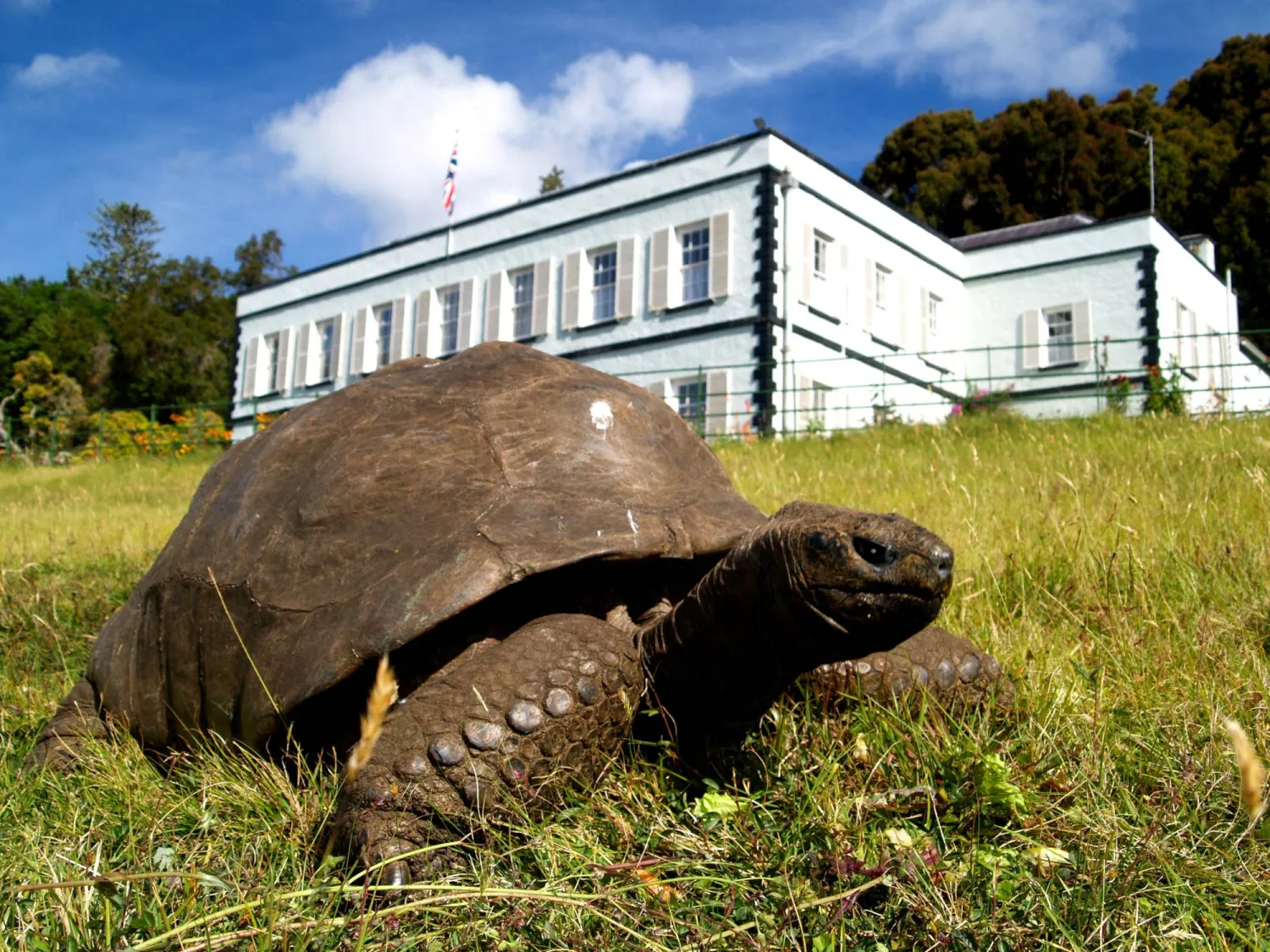
A 194-year-old Tortoise, World's Oldest Land Animal, May Hold Clues to Longer Life

Tortoise named Jonathan, a giant tortoise believed to be the world's oldest known living land animal, stands in front of Plantation House, in St Paul on the South Atlantic island of St Helena, January 6, 2013.  Joe Hollins/Handout via REUTERS
Tortoise named Jonathan, a giant tortoise believed to be the world's oldest known living land animal, stands in front of Plantation House, in St Paul on the South Atlantic island of St Helena, January 6, 2013. Joe Hollins/Handout via REUTERS
TT

A 194-year-old Tortoise, World's Oldest Land Animal, May Hold Clues to Longer Life

Tortoise named Jonathan, a giant tortoise believed to be the world's oldest known living land animal, stands in front of Plantation House, in St Paul on the South Atlantic island of St Helena, January 6, 2013.  Joe Hollins/Handout via REUTERS
Tortoise named Jonathan, a giant tortoise believed to be the world's oldest known living land animal, stands in front of Plantation House, in St Paul on the South Atlantic island of St Helena, January 6, 2013. Joe Hollins/Handout via REUTERS

The world's oldest-known terrestrial animal, an Aldabra giant tortoise named Jonathan and estimated to be about 194 years old, may owe his extraordinary longevity to a combination of genetic traits and an ability to keep key cellular systems functioning in a more youthful way, according to scientists.

Members of this species are known to live more than 100 years, but Jonathan has far exceeded that. Brought to the remote South Atlantic island of St Helena as a fully grown animal in 1882, likely from the Aldabra Atoll or the Granitic Seychelles, the tortoise now resides in a paddock at Plantation House, the governor's residence.

"Other Aldabra tortoises have been claimed to have lived as long as Jonathan, but he has the most documentary evidence supporting his age," said Benjamin Vaisvil, a researcher affiliated with the organization Kallel and co-lead author of the study published on Wednesday in the journal Science Advances.

Scientists have studied Jonathan to explore the secrets of the animal's amazing longevity, sequencing his genome and analyzing his epigenome — the chemical markers that control which genes switch on and off.

"We found changes in Jonathan's genome in pathways associated with longevity, like DNA repair, mitochondrial function, insulin regulation and telomere function," ⁠Reuters quoted Vaisvil as saying.

Mitochondria are structures ⁠considered the powerhouse of a cell. Insulin is a hormone that helps regulate levels of blood sugar by letting it enter the body's cells for energy. Telomeres are protective caps at the ends of chromosomes, structures that carry genetic information inside cell nuclei.

Researchers compared Jonathan's epigenome with four other Aldabra tortoises, ranging from juveniles to older adults. While pretending to feed Jonathan, they waited until he began biting the air, then wedged his mouth open with a gloved hand and scraped under his tongue with a specialized kit. St Helena officials restrict blood draws to prevent infection risks.

To explain the finding, Vaisvil compared the genome to a cookbook and the epigenome to handwritten notes in the margins.

"As the cookbook ages, those notes become ⁠more difficult to read clearly. We can think of that as methylation entropy," Vaisvil said, referring to a metric for disorder in a certain biochemical process.

Most of the notes in Jonathan's "cookbook" look very old. But in certain regions, stretches of DNA that act as switches controlling whether genes are turned on or off, Jonathan's methylation entropy was lower than that of every tortoise studied except a 5-year-old juvenile. These regions controlled genes that influence longevity.

The researchers identified 287 genes with variants unique to Jonathan, including some linked to tumor suppression and DNA repair. The tortoise also carries extra copies of a gene that encodes a protein that hunts down ageing and cancerous cells.

When younger, Jonathan was known for mischievous antics including overturning chairs and lying on croquet balls, according to the tortoise's longtime veterinarian and study co-author Joe Hollins. Cataracts have since left him mostly blind. Hollins describes Jonathan today as "a gentle giant."

Determining how long giant tortoises can live is challenging because reliable historical records are scarce and many outlive researchers. Record-keeping before the 20th century also was problematic. While a young tortoise's age can be estimated from growth ⁠rings on the plates that form ⁠the animal's shell, ascertaining the age of adults is more difficult.

The new study involved only one exceptionally old tortoise, making it hard to determine whether the traits identified are unique to Jonathan or common among long-lived tortoises.

"We cannot say for certain that what we found is the reason for his longevity," Vaisvil said.

Environmental factors also may have contributed. Jonathan lives on a tropical island, with an optimal diet carefully managed by trained veterinarians.

The research findings broadly match patterns documented in studies of exceptionally long-lived people, suggesting that some mechanisms of aging may be shared across species.

Vaisvil noted that a recent study of a 117-year-old woman found unusually efficient mitochondrial function, echoing findings in some of Jonathan's regions.

Despite his age, Jonathan retains a voracious appetite, Hollins said, lifting his head and stretching out his long neck when the veterinarian calls out his name.

"I know he knows me, knows my voice and my handling, and I also know it isn't love on his part but a recognition of the arrival of a feast," Hollins said. "And yet I, of course, don't mind. I have a huge affection for him."

"He is a remarkable symbol. Icon, I know, is an overused word, but Guinness World Records has just given him 'icon' status this year," Hollins said.

Beloved by island residents, Jonathan has lived through world wars and the rise and fall of empires.

"He is symbolic of resilience, longevity, endurance, a persistent presence throughout huge historic events," Hollins said.


Barn Owls, Bees, Puffins and Hedgehogs to Feature on UK Banknotes

FILE PHOTO: Mock-ups of banknotes featuring wildlife are shown, after the public chose that theme from the suggested options of a consultation held by the Bank of England for the next series of banknote designs, in this handout image obtained by Reuters on March 10, 2026. Bank of England/Handout via REUTERS
TT

Barn Owls, Bees, Puffins and Hedgehogs to Feature on UK Banknotes

FILE PHOTO: Mock-ups of banknotes featuring wildlife are shown, after the public chose that theme from the suggested options of a consultation held by the Bank of England for the next series of banknote designs, in this handout image obtained by Reuters on March 10, 2026. Bank of England/Handout via REUTERS

Barn owls, bumblebees, puffins and hedgehogs will feature on new Bank of England banknotes over the coming years, replacing World War Two leader Winston Churchill and other historic figures, the Bank of England said on Thursday.

The BoE's decision in March to no longer feature famous Britons on future banknotes, in favor of native wildlife, dismayed politicians across the political spectrum and prompted speculation that the central bank wanted to avoid controversies around historic figures.

The BoE said the change would make its banknotes ⁠more distinctive and harder ⁠to counterfeit, and followed a public consultation where people had been invited to choose between different categories of images.

Almost 500,000 people voted on a selection of 18 animals released by the central bank in June.

The buff-tailed bumblebee was the most popular creature ⁠on the shortlist, followed by the barn owl and the European hedgehog. Red foxes and common kingfishers received more votes than the Atlantic puffin, which the BoE selected to ensure a marine animal was on the list.

"I am delighted that nearly half a million people responded to our wildlife imagery consultation, showing that cash still matters," Reuters quoted BoE Chief Cashier Victoria Cleland as saying.

Cash usage has fallen steeply in Britain in recent years, accelerated by ⁠the COVID-19 ⁠pandemic which led to almost all retailers accepting contactless card and smartphone payments.

Under 10% of payments were made by cash in 2024, but trade body UK Finance said it expected the decline to level off as a small percentage of Britons strongly preferred to use cash.

The new banknotes will continue to feature the monarch. The £5 Churchill note, issued in 2016, is the first due to be replaced, followed by the £10 with novelist Jane Austen, £20 with artist JMW Turner and £50 with mathematician Alan Turing.